Implant-Supported Dentures in Murphy, TX
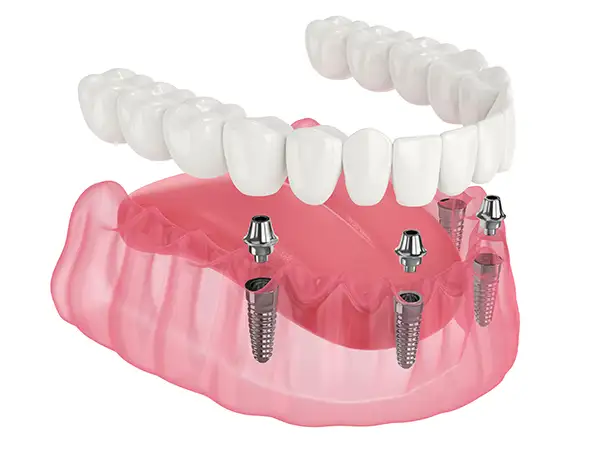 Implant-supported dentures in Murphy, TX are full dentures with built-in fittings that lock onto a few dental implants, giving a loose denture something solid to hold. At Parkside Dental, we place the implants in our office and partner with an outside dental lab to build the denture. In many cases, that means a removable denture that clicks onto the implants and comes out for cleaning.
This page is for people who are done with a denture that slides, rubs, or needs a tube of adhesive to stay in. If you’re still comparing every way to replace teeth, our dental implants overview is a better place to start, and our dentures page covers traditional complete and partial dentures.
Here, we focus on the middle ground: a denture that still looks like natural teeth, anchored to a handful of implants.
On This Page
What Makes a Denture Implant-Supported
A regular denture rests on your gums and relies on suction, a snug fit, or adhesive. An implant-supported denture adds anchors. Dental implants are small posts placed in the jawbone, and once they’ve bonded with the bone, the denture connects to them instead of floating on soft tissue.
MedlinePlus, from the National Library of Medicine, notes that implants help stabilize a denture, limit its movement, and prevent sores. For many people, those three changes are the whole point.
Snap-In Dentures You Can Remove
A removable implant-supported denture, often called a snap-in denture or overdenture, has small fittings on its underside that click onto matching parts on the implants. You press it into place in the morning and take it out to clean it.
Being able to remove it is a real advantage. You can brush the denture outside your mouth, clean around each implant easily, and give your gums a rest overnight.
Teeth That Stay In Full Time
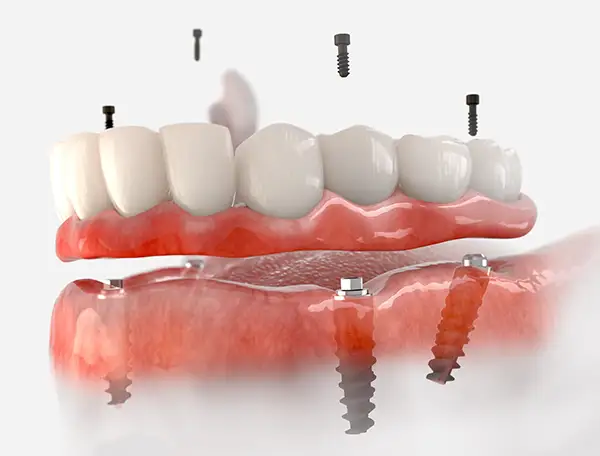 A second design attaches to the implants so firmly that only our team can take it off. Whether a fixed full-arch design fits your case depends on your bone, your bite, and how many implants your jaw can support. Ask us about it at your consultation, and we’ll compare both designs against your X-rays and goals.
Are You a Good Fit?
You may be a good candidate if you’re missing all of your teeth in one jaw, wear a denture that won’t stay put, or are about to lose your remaining teeth. Your gums need to be healthy, and your jawbone needs enough volume to hold the implants. Smoking and uncontrolled diabetes deserve an honest conversation up front: the FDA notes that smoking can affect healing and long-term success, and that uncontrolled diabetes can make infection more likely. We look at your gums, bone, remaining teeth, bite, and medical history together rather than assuming one design suits everyone.
If You Already Wear a Denture
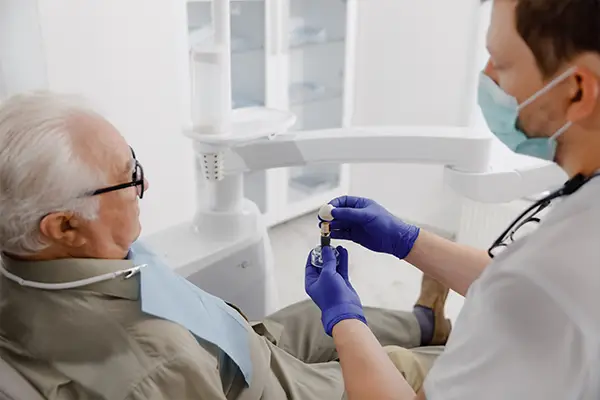 Maybe your denture lifts when you chew, lets food slip underneath, or keeps rubbing the same sore spot. If that sounds familiar, bring your current denture to your consultation so we can see how it fits and where it rubs.
There’s another reason to act sooner rather than later. When teeth are gone, the jawbone that used to hold them can slowly shrink, and that’s one reason a denture that fit well years ago can feel loose now. The FDA lists helping keep the jawbone from shrinking among the benefits of dental implants.
If you still have a few failing teeth, the plan often starts with removing them. Our gentle extractions page explains that visit. While your gums heal, which takes about six to eight weeks, an immediate denture can keep you from going without teeth. Our post on what your dentist does when you have no teeth left covers the bigger picture of care after tooth loss.
It helps to come to your consultation with a short list: what bothers you most about your current denture, which foods you avoid, the medications you take, and whether you’d rather have teeth you can remove or ones that stay in. Those answers shape the design as much as your X-rays do.
The Doctors Behind Your Treatment
Dr. Jason Larsen handles the implant side of treatment at Parkside Dental. He consults with implant patients, places the implants himself, and takes the images and impressions the lab uses to build your denture. He earned his Doctorate of Dental Surgery from NYU in 2010 and has completed advanced courses on dental implants, along with continuing education in CAD/CAM dentistry.
Dr. Jean Larsen also helps patients compare their tooth replacement options. She studied biology at the University of Maryland, Baltimore County, attended dental school at NYU, and is a member of the American Academy of Facial Esthetics. Both doctors belong to the American Dental Association and the Academy of General Dentistry.
Treatment Stages at Our Murphy Office
Implant-supported denture treatment happens in stages over several months. If teeth need to come out first, we provide an immediate denture to wear while the sites heal. Here’s how the work is divided:
| 1. |
Consultation and imaging – we examine your gums, bone, and any remaining teeth, review your health history, and use dental imaging to map where implants can go
|
| 2. |
Preparation – some patients need extractions or bone grafting before implants, while others are ready right away
|
| 3. |
Implant placement – after numbing the area, we place each implant through a small opening in the gum and close the site with stitches
|
| 4. |
Healing – implants usually take about three to six months to fully bond with the jawbone, with checkups at our office along the way
|
| 5. |
Building and attaching your denture – we take images and impressions, an outside lab builds the denture, and we check the fit before connecting it |
For a closer look at each appointment, read our dental implant timeline. Your own schedule depends on how many implants you need, whether any extractions or grafts come first, and how your mouth heals.
Living With Your New Denture
Most people need some time to get used to new dentures, and the American Dental Association notes they can feel awkward for a few weeks. With implants holding the denture steady, you won’t be fighting a sliding plate while you learn to speak and chew with it.
Daily care for a removable implant denture looks like this:
| • |
Take it out every night – MedlinePlus advises removing dentures overnight to prevent sores, infections, and inflammation
|
| • |
Clean the denture gently – scrub it with plain soap and lukewarm water, not toothpaste, which is too harsh
|
| • |
Clean around each implant – plaque on the posts and gums still needs daily brushing
|
| • |
Store it in water or cleaner – dentures kept dry can warp |
The small inserts inside a snap-in denture wear with daily use, and research reviews list worn retentive parts as the most common reason implant overdentures need maintenance. If your denture starts to feel looser, let us know so we can check the attachments. The FDA recommends regular dental visits after implant treatment and telling your dentist right away if an implant feels loose or painful. Our page on signs of dental implant failure explains what to watch for.
Regular cleanings stay just as important, because the gum around each implant post needs the same attention natural teeth get. Elena, one of our hygienists, brings more than 30 years of experience across general, periodontal, and pediatric practices to that work.
Why Choose Parkside Dental
At our office, the same dentist who plans your implants also places them and handles the impressions for your denture. You won’t bounce between offices to get from consultation to final teeth, and your records stay in one place the whole time.
Implant dentures take patience, so the setting matters. Our Murphy office offers complimentary beverages, cozy blankets, noise-canceling headphones, and entertainment options. Kelli, our Treatment Care Coordinator, has more than 20 years in dentistry.
If you need more than new teeth, such as treatment for worn or damaged teeth in the opposite jaw, an implant denture can be one part of a larger full mouth reconstruction plan. If you’re keeping natural teeth in the opposite jaw, restorative care such as CEREC same-day crowns can help keep those teeth strong enough to bite against your new denture.
Paying for Your Implant Denture
 Your estimate is built from a few pieces: the number of implants, one jaw or two, the style of denture, and any extractions or grafting that need to happen first. We’ll give you a personal estimate after your consultation, once we know what your plan includes.
Implant coverage varies widely between insurance plans. Some policies contribute toward certain parts of treatment, while others offer little or no implant benefit. We’re in-network with many insurers, including Aetna, BlueCross BlueShield, Cigna, MetLife, Delta, Guardian, Humana, and Ameritas, and our Insurance Coordinator can help you understand your benefits.
To spread the cost out, we work with Cherry, Alphaeon Credit, and CareCredit. See our financial information page for details on financing and our in-house Dental Loyalty Plan.
Book a Consultation
Bring your denture and a list of the foods you miss, and we’ll show you what an implant-anchored version could look like. Call (972) 442-7550 to schedule an implant denture consultation, or visit our contact page to book online. Parkside Dental is located at 703 E. FM 544 Suite 100, Murphy, TX 75094.
Frequently Asked Questions
What decides the number of implants?
We won’t know until we’ve seen your imaging, because bone volume and the design you choose both change the count. Once we’ve reviewed it, we’ll recommend a specific number and explain why.
Can you use the denture I already have?
Possibly. We check how well it fits now, how worn the teeth are, and whether the fittings can sit where your implants need to go. Bring it to your consultation and we’ll tell you whether it can be adapted or whether a new denture will work better with your implants.
Will I have something to wear between appointments?
Usually a denture. If teeth come out first, we give you an immediate denture while the sites heal, and as your gums shrink over those six to eight weeks it may need adjusting. The step-by-step implant timeline shows where those adjustments usually fit in.
Will I be able to eat normally?
Most people find chewing much easier than with a loose denture, because the implants keep the teeth from shifting. The FDA lists restoring the ability to chew among the main benefits of dental implants. Expect a short adjustment period while your tongue, cheeks, and bite get used to the new teeth.
How sore will I be after implant placement?
Expect some tenderness for a few days. We numb the area before placing implants, so you shouldn’t feel the procedure itself. Our implant timeline notes that the site usually feels relatively normal in about two weeks, while the implant keeps bonding with the bone for several months.
How long does an implant-supported denture last?
The implants are meant to be a long-term foundation, while the denture and its snap-in parts wear with use and need periodic service. How long everything lasts depends on your home care, regular checkups, bite forces, and overall health. Keeping your cleaning visits on schedule lets us catch wear before it becomes a bigger repair.
Do I need to tell other doctors that I have implants?
Yes. The FDA advises telling your health care providers that you have dental implants before an MRI or X-ray, since implants can affect some images. The FDA also suggests keeping a record of the brand and model of implant system you receive, so ask us for those details for your records.
Do I still need dental checkups with no natural teeth?
Yes. The FDA recommends regular visits with your dental provider after implant treatment, and those visits are how we catch gum inflammation around an implant or a worn attachment early. We also look over your gums, tongue, and cheeks, and an oral cancer screening stays part of your routine care even without natural teeth.
|